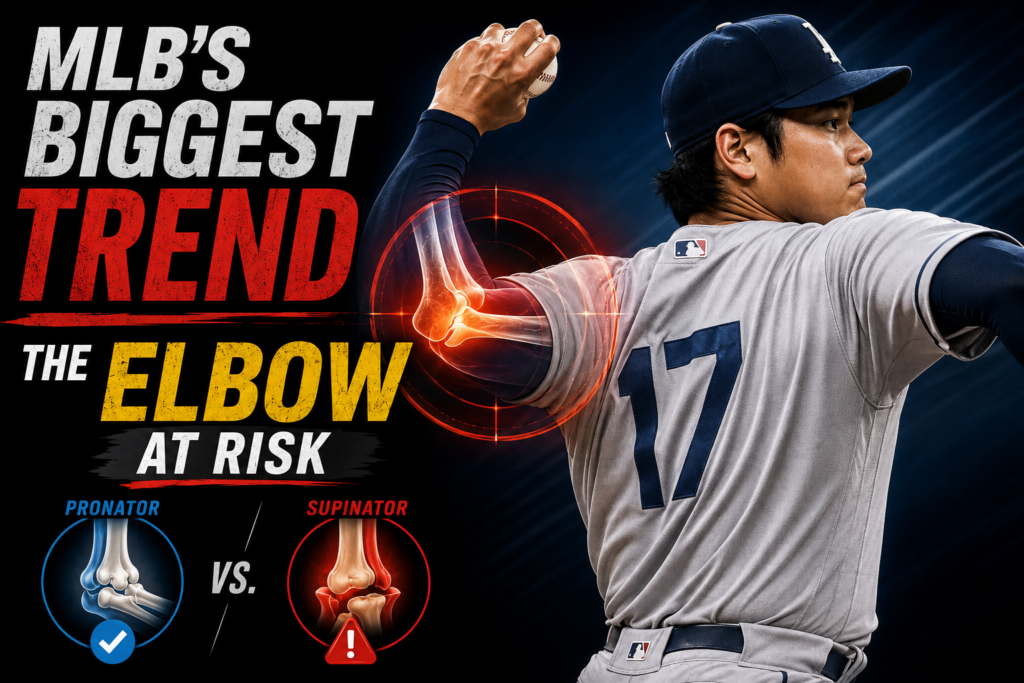
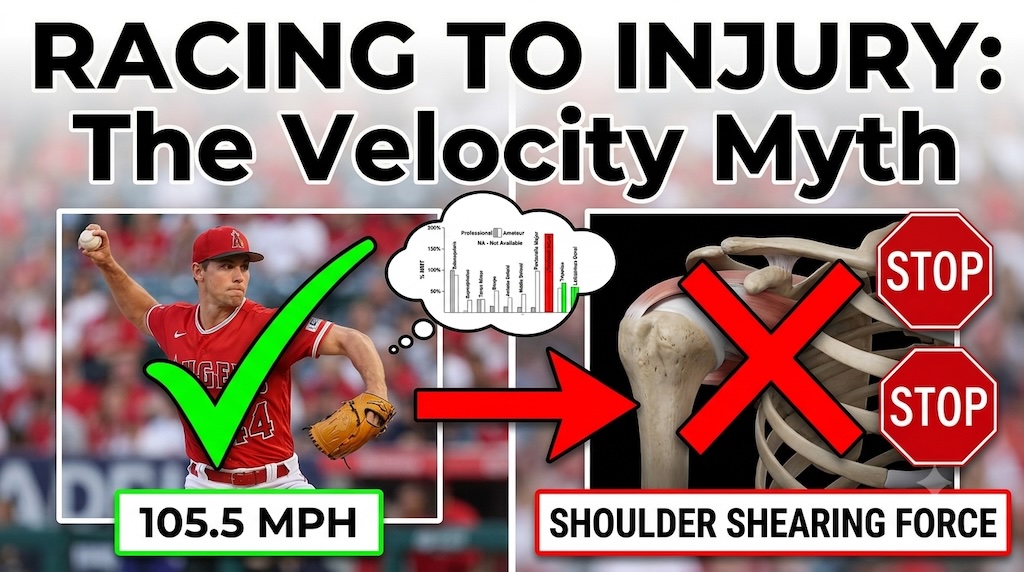
Little League Shoulder and Little League Elbow are becoming increasingly common in adolescent and teenage athletes. As year-round competition, early specialization, and velocity demands continue to rise, so does the stress placed on developing arms.
In this blog, we’ll break down:
-
What these injuries actually are
-
Why they occur
-
And how they can be properly treated and prevented
Little League shoulder and elbow are growth plate stress injuries. More specifically, they involve a stress reaction or stress fracture of the unfused epiphyseal plate — most commonly at:
-
The proximal humerus (shoulder)
-
The medial epicondyle (inside of the elbow)
-
The olecranon (back of the elbow)
In skeletally immature athletes, the growth plate is the weakest link in the chain. Contrary to what many assume, the bone in these skeletally immature athletes is often weaker than the surrounding tendons and ligaments.
When repetitive high-velocity throwing loads the arm, the soft tissues generally remain intact but the excessive traction and compression forces can cause the epiphyseal plate to separate from the stable bone.
In many cases, growth plate injuries are precursors to soft tissue injuries such as UCL sprains or tears, labral pathology, and rotator cuff injuries.
This is not “just soreness.” It is the body’s warning sign that something needs to change.
Ultimately, all injuries stem from tissue overload. The real question is: why is the tissue being overloaded?
There are two primary contributors:
1. Muscular Weakness and Instability
If the rotator cuff and periscapular stabilizers cannot control humeral head movement during the throwing motion, excessive joint translation occurs. Increased movement inside the glenohumeral joint leads to increased stress on surrounding structures — including the growth plate.
2. Inefficient Throwing Mechanics
Poor positioning during the throwing motion increases impulsive loading on the arm. Faulty mechanics can amplify stress at the shoulder and elbow, particularly during the late cocking and acceleration phases.
Most adolescent athletes present deficits in both strength and mechanical efficiency.
If these root causes are not addressed, symptoms may temporarily improve — but reinjury is highly likely. Treating pain without correcting the underlying instability and movement inefficiency only postpones the problem.
Injuries don’t just “happen”. There is a cause and effect. In order to successfully decrease one’s likelihood of injury, or reinjury, we must take a more comprehensive look at the underlying issue and identify limiting factors that are indirectly, or directly, causing the injury.
The first priority is restoring, or gaining, shoulder stability.
Throwing with an unstable shoulder increases the likelihood of:
-
Pain
-
Mechanical breakdown
-
Decreased performance
-
Progressive tissue damage
However, not all strengthening is equal.
If we look at this EMG analysis of one of the rotator cuff muscles, the supraspinatus, we will see that this muscle in particular has to work much harder to provide the same amount of stability when the shoulder is unstable. This is the case for most of the muscles surrounding the shoulder and elbow.
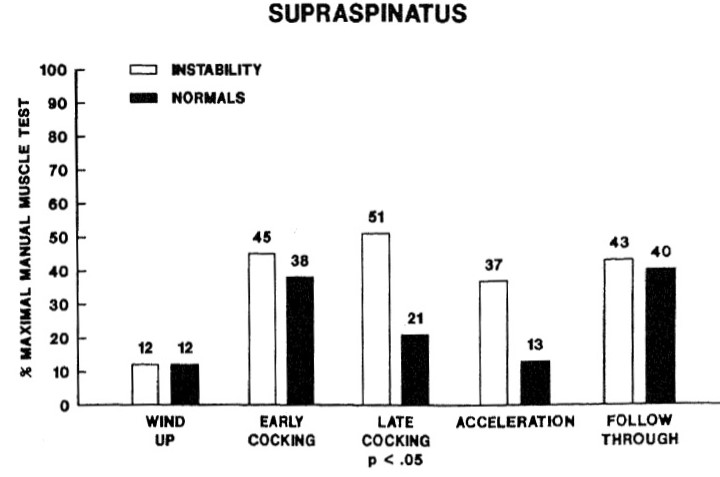
Mechanical effort is greater in unstable shoulders vs stable shoulders. Increased mechanical effort leads to quicker fatigue, decreased efficiency, and ultimately, further mechanical breakdown.
For overhead athletes, rotator cuff and periscapular strengthening must be:
-
Specific to the demands of the throw
-
Loaded appropriately
-
Integrated into functional movement patterns
Generic band exercises alone are not enough. Many times we see “arm care” exercises done incorrectly, even from “credible” sources. The rotator cuff consists of very small muscles that do a particular movement. Technique has to be king when doing these exercises or results will be arbitrary.
When properly trained:
Increased rotator cuff and scapular strength → Improved glenohumeral stability → Reduced humeral head translation → Decreased stress on surrounding structures
Strength creates the necessary, stable platform for performance and health but it is only part of the equation. We must address biomechanical inadequacies that exist within the kinematic sequence of an individual’s throw. Strength is the foundation and mechanical efficiency is the long-term solution.
Even a strong shoulder cannot overcome poor physics. If mechanical inefficiencies persist, stress will continue to concentrate in vulnerable areas — regardless of strength gains.
Biomechanical intervention ensures:
-
Efficient energy transfer throughout the kinetic chain
-
Proper arm timing and positioning
-
Reduced valgus and rotational stress
-
Sustainable velocity development
When mechanics improve, stress is distributed more effectively across the entire kinetic chain — rather than being absorbed by the shoulder and elbow alone.
For example, in a study, researchers found that increased forearm pronation early in the take away phase facilitates proper external rotation of the shoulder with reduced valgus stress (Marsh, 2010). This study also highlights how proper elbow elevation (at or above 90 degrees of abduction) is critical for reducing rotary stress during the late cocking and acceleration phase of the throw (Marsh, 2010)
Now, identifying mechanical faults is one thing, but having an actual understanding of how to effectively rectify those faults is a whole other matter.
In an effort to make sustainable and permanent change to one’s movement pattern, we must comprehend how learning a new habit truly takes place. We must comprehend how to use external and internal cueing to facilitate the desired outcome. This comes from understanding the basic principles of motor learning and how to apply that.
Growth plate injuries are not random. They are the result of repeated overload in an unstable and inefficient system.
The most effective approach to rehabilitation and long-term durability includes:
-
Targeted, throwing-specific strength development
-
Objective biomechanical analysis
-
Mechanical refinement
-
Progressive return-to-throw programming
When both strength and mechanics improve, athletes don’t just reduce injury risk — they build the foundation for sustainable velocity and performance.
This is why it is essential to seek out a rehabilitation and biomechanics specialist to effectively remedy an athlete’s muscular imbalances and biomechanical deficiencies.
References
Marsh, D. (2010). Little League elbow: Risk factors and prevention strategies. Strength & Conditioning Journal, 32(6), 22-37.
Glousman, R., Jobe, F. W., Tibone, J., et al. (1988). Dynamic electromyographic analysis of the throwing shoulder with glenohumeral instability. The Journal of Bone and Joint Surgery, 70(2): 220–226.